
Your Guide to a Mountain Wedding in Colorado
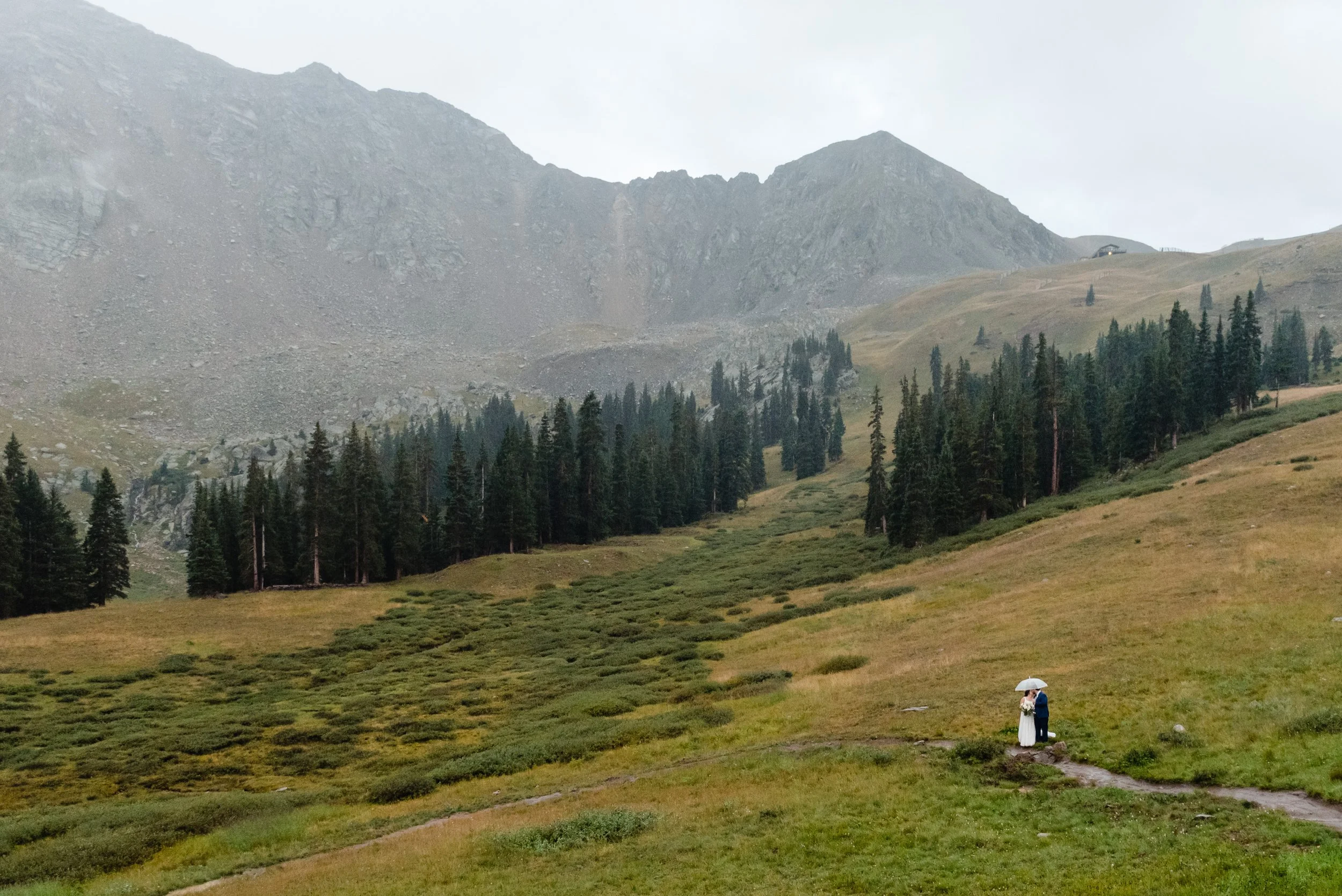
Planning a mountain wedding in Colorado is about more than those amazing views and alpine backdrops. Elevation, weather, and proper planning all play a part in creating a magical experience for you and your guests.
As a Colorado wedding photographer, I've seen firsthand how that proper planning can make or break a mountain wedding day. Whether you're dreaming of a full celebration at a scenic venue or an intimate hiking ceremony, this guide walks you through what to consider so your Colorado mountain wedding feels just as incredible as it looks.
What to Consider When Planning a Mountain Wedding in Colorado
Colorado is known for its mountainous terrain; even Denver sits at a famous "mile high." So what actually qualifies as a true mountain wedding? I consider Colorado weddings at 8,000 feet or above to be high-altitude, since that's when guests traveling from lower elevations are most likely to experience physical symptoms. At these elevations, hydration, added comfort measures, and a relaxed timeline become especially important to guarantee everyone feels good and enjoys the day.
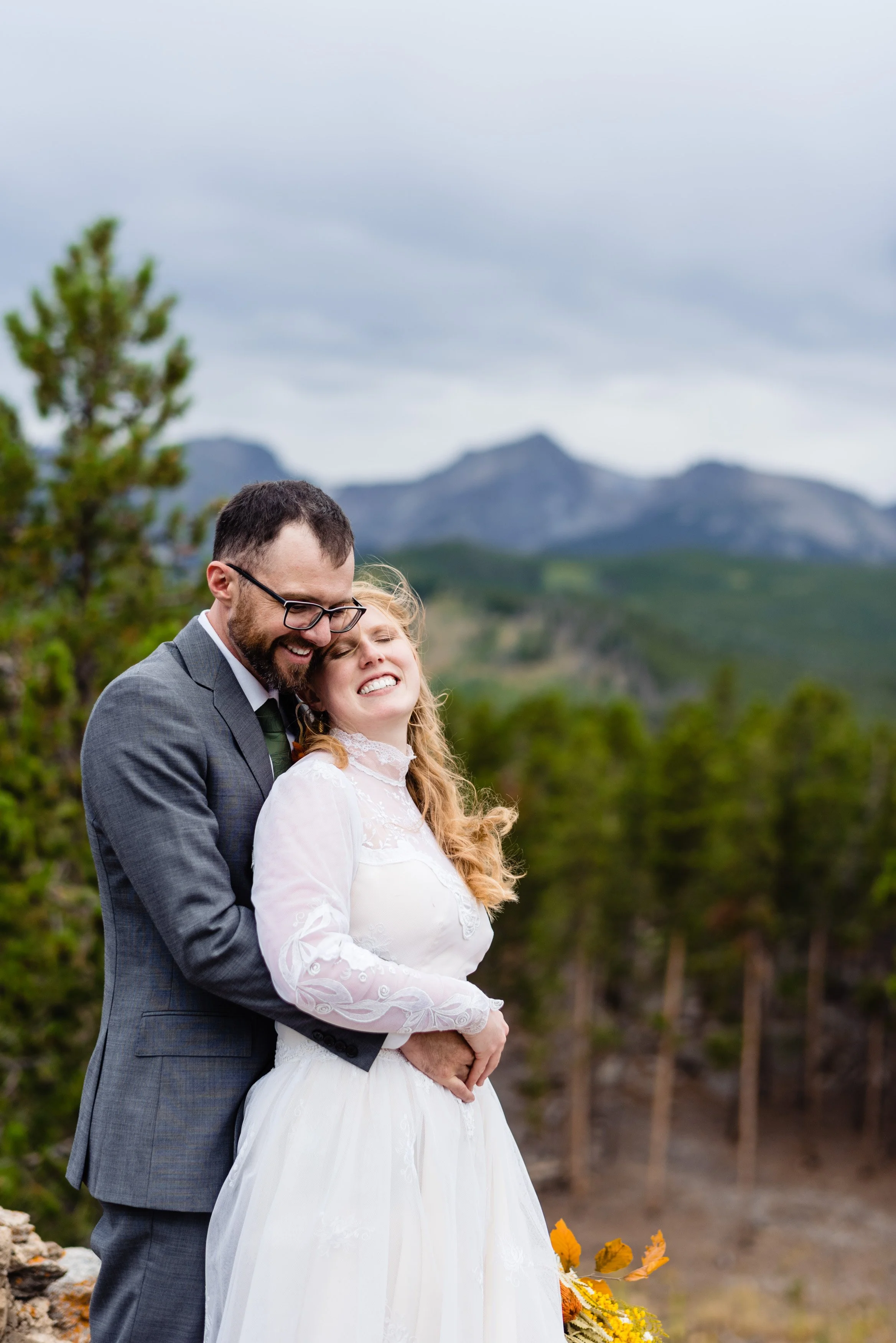
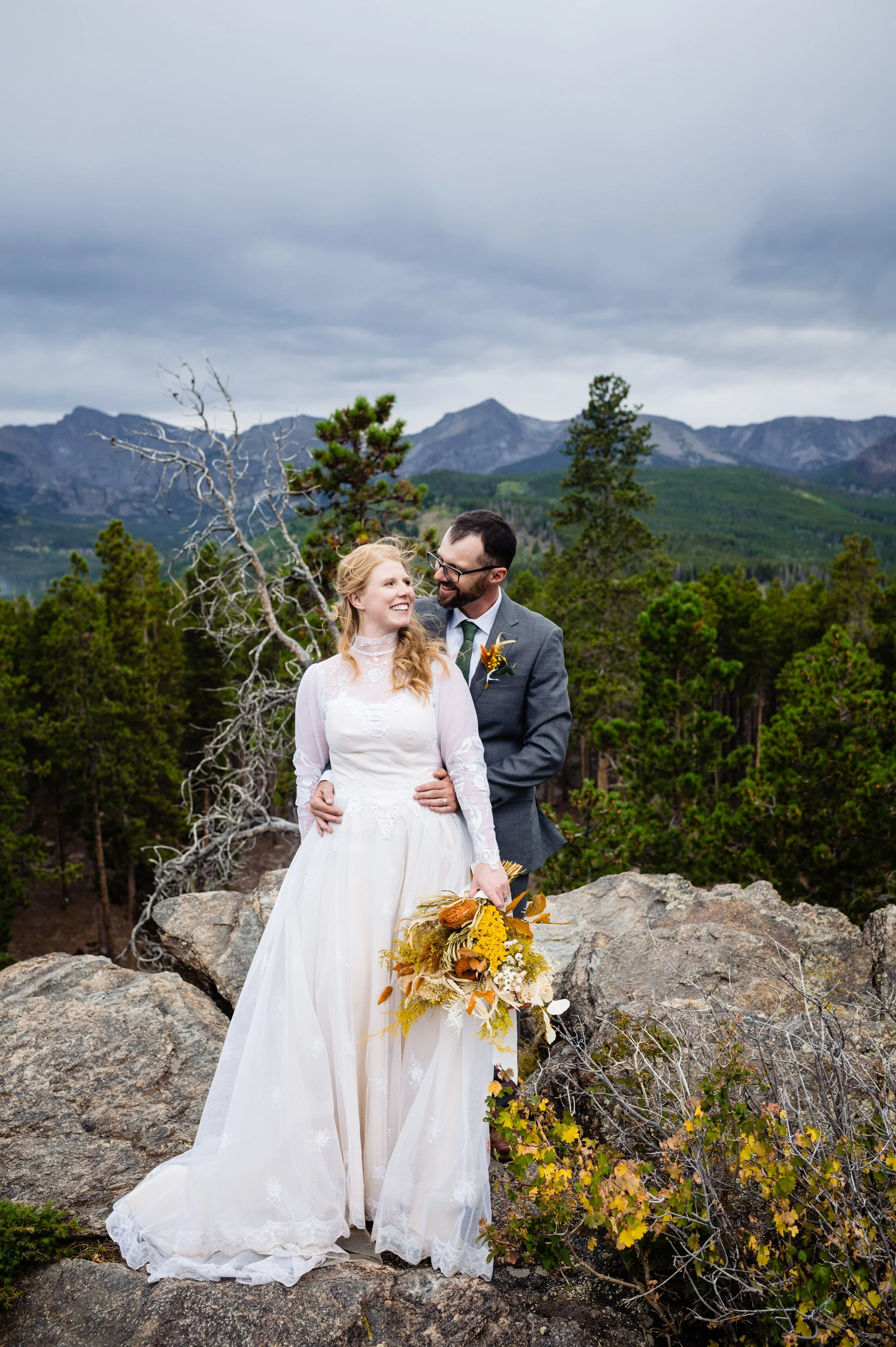
When you're researching venues, elevation can start to feel incredibly confusing, especially if you live at sea level. Here's a simple breakdown of what to expect at different altitude ranges:
5,000 – 7,000 ft. (Moderate)
Most guests won’t experience noticeable physical symptoms, though hydration and sun protection are still important. Locations in this range include Denver (5,280 ft.), Boulder (5,400 ft.), and Colorado Springs (6,000 ft.).
7,000 – 8,500 ft. (Moderately High)
Some guests may experience mild headaches, fatigue, or reduced endurance. Common locations include Estes Park (7,522 ft.) and Vail (8,120 ft.).
8,500 – 10,000 ft. (High)
Without proper hydration and time to acclimate, many guests will notice altitude-related symptoms such as headaches and fatigue. Popular locations in this range include Breckenridge (9,600 ft.) and Telluride (8,750 ft.).
10,000+ ft. (Very High)
At these elevations, physical symptoms are expected, along with stronger winds and occasionally some weird weather. Several ceremony sites and scenic locations within Rocky Mountain National Park exceed 10,000 feet (for planning tips, see my dedicated guide). Some ski resort summit locations also fall into this category; Vail's upper mountain reaches 11,570 feet, while Breckenridge peaks at 12,998 feet. Having photographed at this elevation many times, I can guarantee that most people will feel a difference, and it’s especially important to plan ahead.
Guest Comfort and Altitude Planning
If you’re planning a wedding at 7,000 feet or higher, altitude is something you’ll want to think about early, especially if most of your guests are coming from sea level.
Even people who are active and in good shape can feel the difference. Guests may get tired faster, feel short of breath, develop headaches, or realize that one glass of champagne feels more like two. The sun is also stronger at higher elevations, and mountain weather can shift quickly, so a little preparation goes a long way.
This doesn’t mean your guests need to be nervous about attending a mountain wedding, or even think too much about it, it just means you’ll want to build the day with comfort in mind.
Give Guests Time to Adjust
Whenever possible, encourage guests to arrive at least 24–48 hours before the wedding. If your ceremony is at or above 9,000 feet, arriving earlier is even better.
That extra time gives people a chance to settle in, hydrate, rest, and adjust before the wedding day itself. It can make a big difference, especially for guests who are older, traveling with kids, or coming from lower elevations.
Be Realistic about your Timeline
Mountain weddings usually need a little more breathing room than city weddings. Travel takes longer, parking can be slower, guests may need more time to walk between locations, and everyone’s stamina may be a little lower than expected.
When building your timeline, think through things like:
Extra time for driving, parking, and walking to the ceremony site
Hydration and rest breaks throughout the day
A ceremony length that makes sense for the season and elevation
Accommodation for elderly or disabled guests
How far guests will need to walk in dress shoes, snow, gravel, or uneven terrain
For example, a 40-minute outdoor ceremony at 10,000 feet in winter might sound beautiful in theory, but it can be uncomfortable very quickly once wind, cold, altitude, and standing time all come together. You don’t want the only thing your guests to remember is the perpetual frostbite they got.
Share a Simple Altitude Prep Guide
One of the easiest ways to help your guests is to include a short altitude note on your wedding website or in your welcome information. It doesn’t have to be anything crazy, but something short that people can pick and choose items from.
You might remind guests to:
Start hydrating before they travel
Bring electrolytes or pick some up when they arrive
Eat regular meals, especially if they plan to drink
Take it easy with alcohol on the first day at altitude
Pack sunscreen, sunglasses, and chapstick
Bring layers for after sunset
Wear shoes with good traction
Bring headache medicine if they know altitude tends to bother them
Most guests will appreciate the heads-up, especially if they’ve never spent time in the mountains, and if they don’t, at least you tried!
Be Practical with your Amenities
Small add-ons can make a big difference at a mountain wedding. Depending on your venue and season, consider offering:
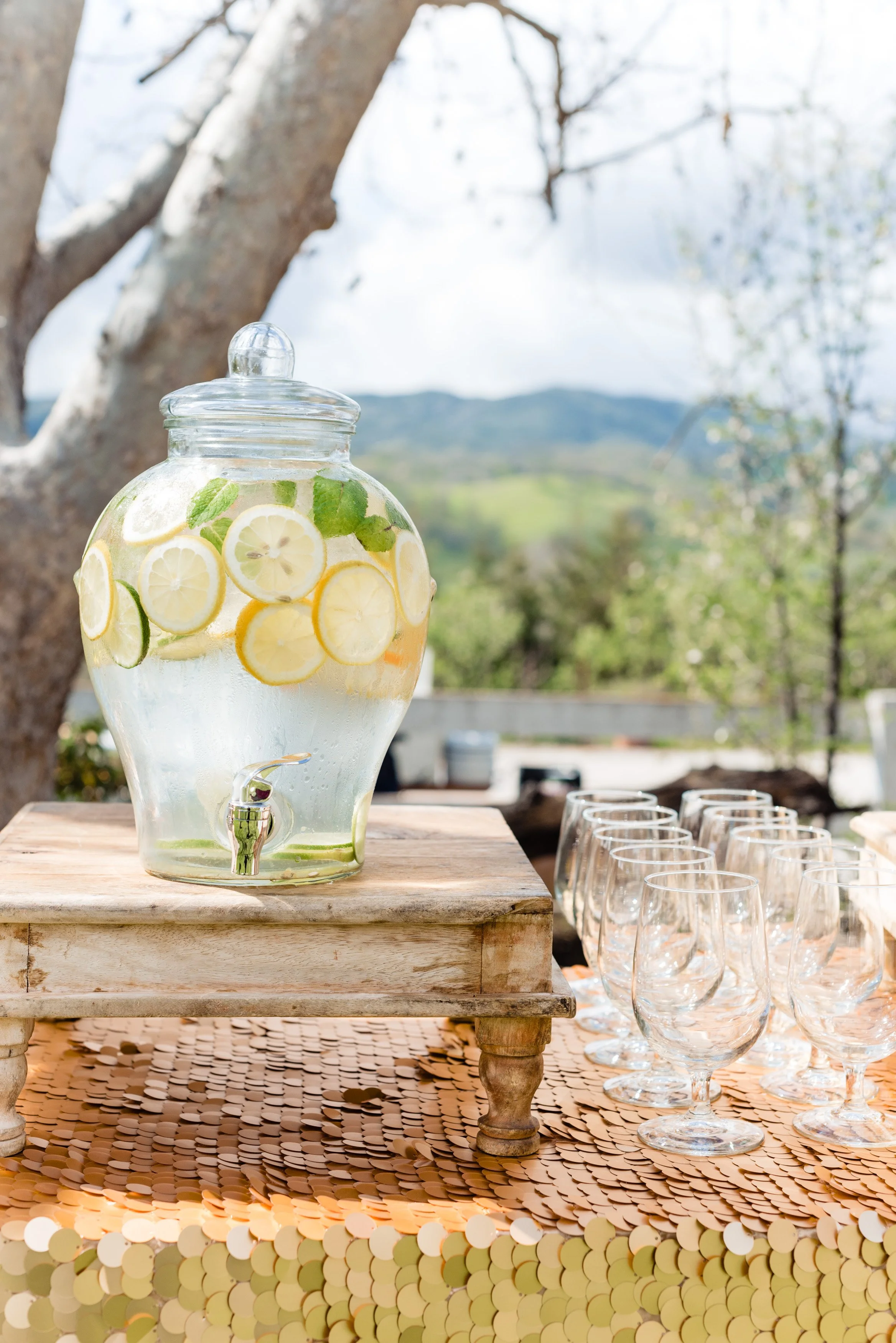
Water stations near the ceremony
Electrolyte packets in welcome bags
Light snacks before the ceremony
Blankets for outdoor seating
Hand warmers or foot warmers in colder months
A shaded or indoor area where guests can take a break
Basic first-aid supplies
Portable restrooms, if your location requires them
An oxygen bar (such as Peak Oxygen)
You don’t need to provide everything. The goal is simply to think through what guests might need before they have to ask for it, and a lot of these items can be pretty affordable for the benefit.

How Altitude Can Affect Your Wedding Day
Altitude planning isn’t only about guest comfort. It can also affect the flow of the day, your vendor logistics, and your backup plans.
Travel, Parking, and Mountain Timing
Mountain travel almost always takes longer than couples expect. Roads like I-70, mountain passes, and national park entrances can get backed up, especially on weekends, holidays, and during peak summer or fall color season. I personally always like to add in some extra buffer, and often refer to is as the “Oh shit” buffer to my couples’, as often a wedding day can be unpredictable.
Build in extra time for:
Driving into the mountains
Parking
Walking to the ceremony site
Shuttle loading and unloading
Guests arriving a little slower than expected
If parking is limited, or if guests will be arriving close to sunset, shuttles can make the day feel much smoother and safer.
Some mountain locations, including national parks, state parks, and national forest areas, may also require permits for wedding ceremonies. Many have guest count limits, seasonal closures, noise rules, or restrictions on chairs, arches, florals, and amplified sound. Always check the rules early so you aren’t surprised as the wedding date approaches.
Weather and Backup Plans
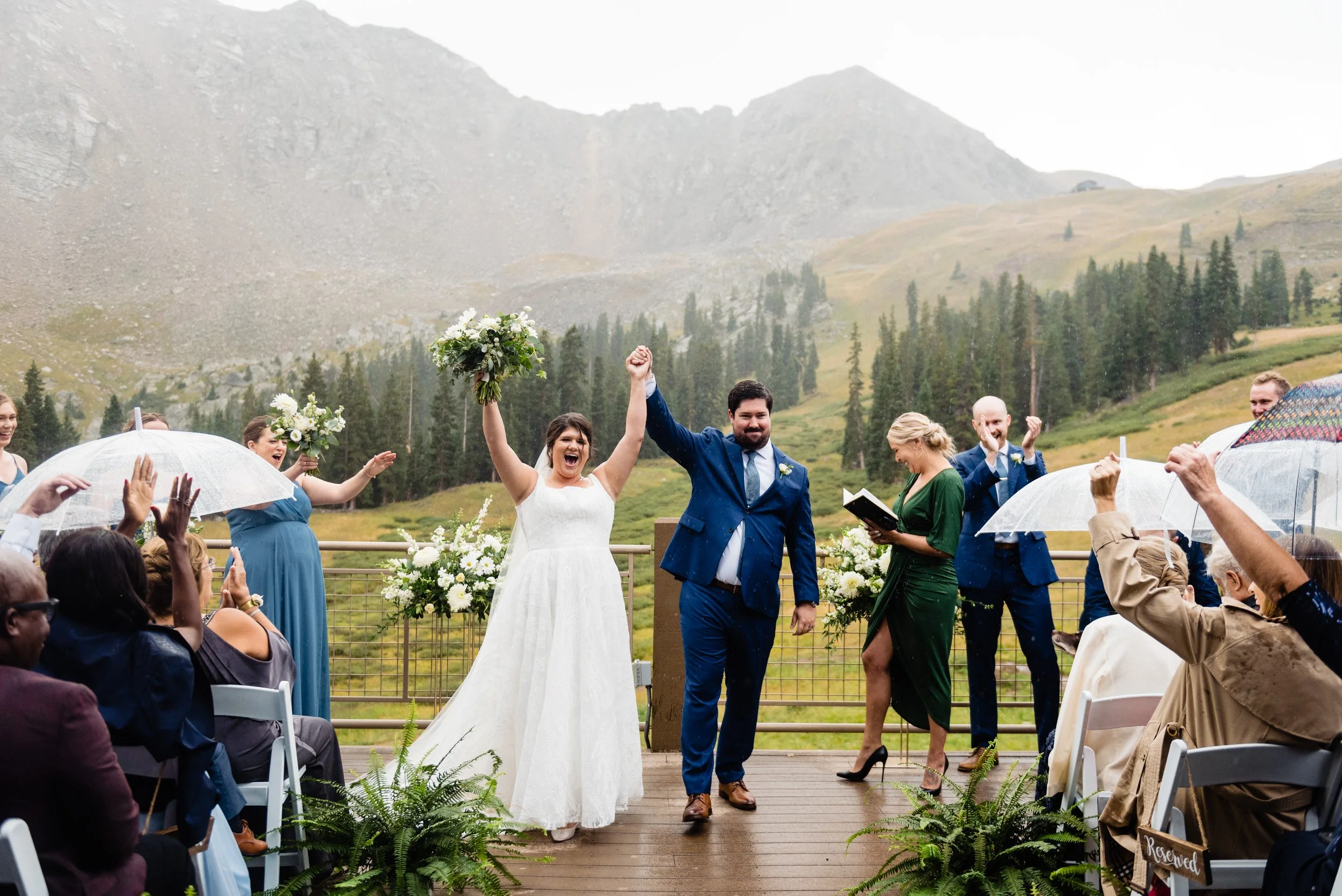
In the mountains, wind is often the bigger issue, not rain. A light drizzle might be manageable, but strong winds can quickly affect hair, florals, ceremony audio, decor, table settings, and guest comfort.
Summer afternoons can also bring thunderstorms, especially from June through early August. Winter and shoulder-season weddings may bring snow, icy roads, or sudden temperature drops.
Depending on your venue, your backup plan might include:
Adjusting the ceremony time
Moving to a covered area
Using a tent
Having an indoor ceremony option
Creating warm-up or cool-down spaces for guests
A good mountain wedding plan always leaves room for the weather to be a little Colorado crazy.
Vendor and Equipment Realities
Remote venues and public-land ceremony sites can be beautiful, but they usually involve extra logistics. Cell service may be limited, power may not be available, and vendors (like me!) may need more time to load in or travel between locations.
A few things to plan ahead:
Download maps, directions, playlists, and timelines before the wedding day
Confirm whether your location has power access
Talk with your caterer about food transport, warming, and service logistics
Make sure your hair and makeup plan can handle wind, dry air, and bright sun
Give vendors clear directions if GPS is unreliable
Build extra time into the schedule for setup and travel
Mountain weddings are absolutely worth the extra planning. The key is to treat the setting as part of the experience, not just the backdrop. When you plan around the altitude, weather, travel, and guest comfort, the whole day feels more relaxed for everyone!
The Best Season for a Mountain Wedding in Colorado
In Colorado, there’s no right or wrong time for a mountain wedding, it all comes down to your vision! Each season brings its own kind of magic:
Spring: Moody skies, blooming wildflowers, and fewer crowds
Summer: Long days, lush greenery, and comfortable temperatures
Fall: Golden aspens, epic sunset lighting, and reliable weather
Winter: Snowy landscapes, cozy indoor receptions, and a ski-town romance vibe
This post breaks down the pros and cons of each season in more detail. If you’re unsure which time of year is the right fit, it’s a great place to start!
How to Plan a Hiking Wedding or Elopement
While a hiking wedding technically falls under the umbrella of a mountain wedding, it deserves special attention because of how unique the experience truly is. A hiking wedding or elopement involves hiking to your ceremony location, anything from a short, scenic trail to a multi-mile trek with serious elevation gain. Think of it as a choose-your-own-adventure wedding!
Often limited to just the couple or a handful of loved ones, this style of celebration is perfect for people who think they don’t want a wedding at all. It’s for true outdoor lovers, the ones who would rather sleep in a tent than check into a luxury hotel (hello, kindred spirit).
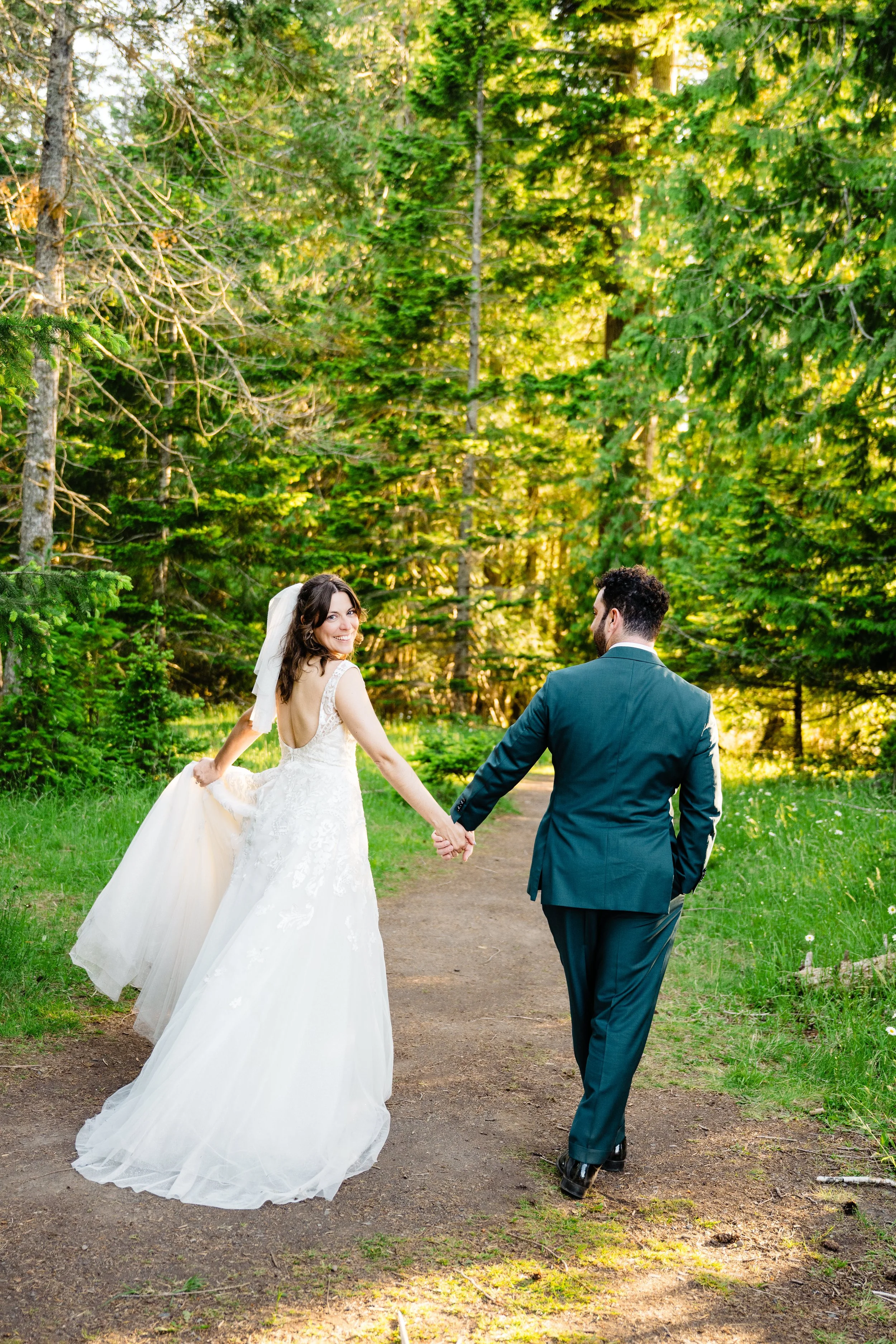
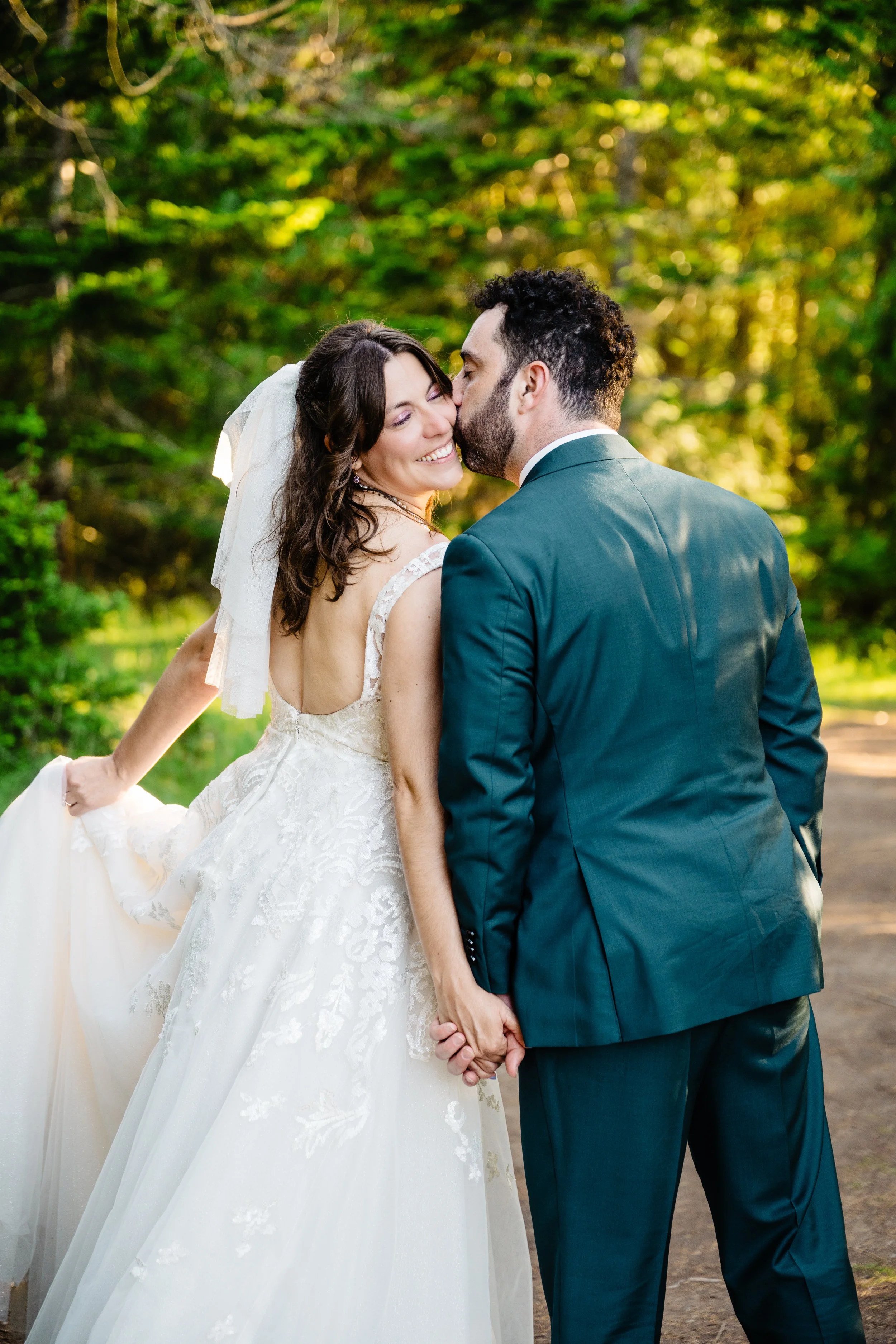
Hiking weddings are beautiful, but they come with a little extra responsibility. Since everything has to be carried in and out, the goal is as simple as leaving the place looking exactly as you found it.
That means keeping things lightweight, intentional, and respectful of the landscape. The mountains don’t need much decorating anyway.
What Leave No Trace Looks Like for a Wedding
A good rule of thumb: if it could blow away, spill, attract animals, damage plants, or be difficult to clean up completely, it’s probably not a good fit for a hiking wedding.
Staying on established trails, rocks, gravel, or other durable surfaces
Packing out everything you bring in, including trash, food scraps, florals, signage, and any small details
Skipping confetti, rice, glitter, sparklers, loose petals, and anything that can blow away
Keeping décor minimal and secure
Giving wildlife plenty of space
Never feeding animals, even if they seem comfortable around people
Keeping the group small and voices low, especially in busy areas
Using restrooms when they’re available
Following local bathroom guidelines when they’re not
Respecting permit rules, posted signs, closures, and restoration areas
What to Bring
Packing for a hiking wedding is part wedding prep, part trail prep. Even if the hike is short, mountain weather can change quickly, and it’s always better to have a few extra things than to wish you had them later.
I usually recommend bringing:
Water
Electrolytes
Snacks
Extra layers
Sunscreen
Chapstick
Sunglasses
A headlamp, especially for sunrise or sunset
A blanket or packable towel for sitting, changing shoes, or protecting your dress
A small first-aid kit
A small trash bag
A clear umbrella or lightweight rain shell
A phone battery pack
Offline maps
Shoes or clothing you may want to change into before or after the ceremony
You don’t need to overpack, and can definitely choose to bring none of these items, but you do want to be realistic about what you and your partner (or family), might need for your adventure. A mountain wedding can still feel relaxed and beautiful, it just helps to be prepared for wind, sun, dirt, weather shifts, and the occasional trail surprise like animals or weather.
What to Wear
For a hiking wedding, comfort matters just as much as the overall look. Choose fabrics that move well, won’t catch easily on branches or brush, and feel good to walk, sit, and climb around in.
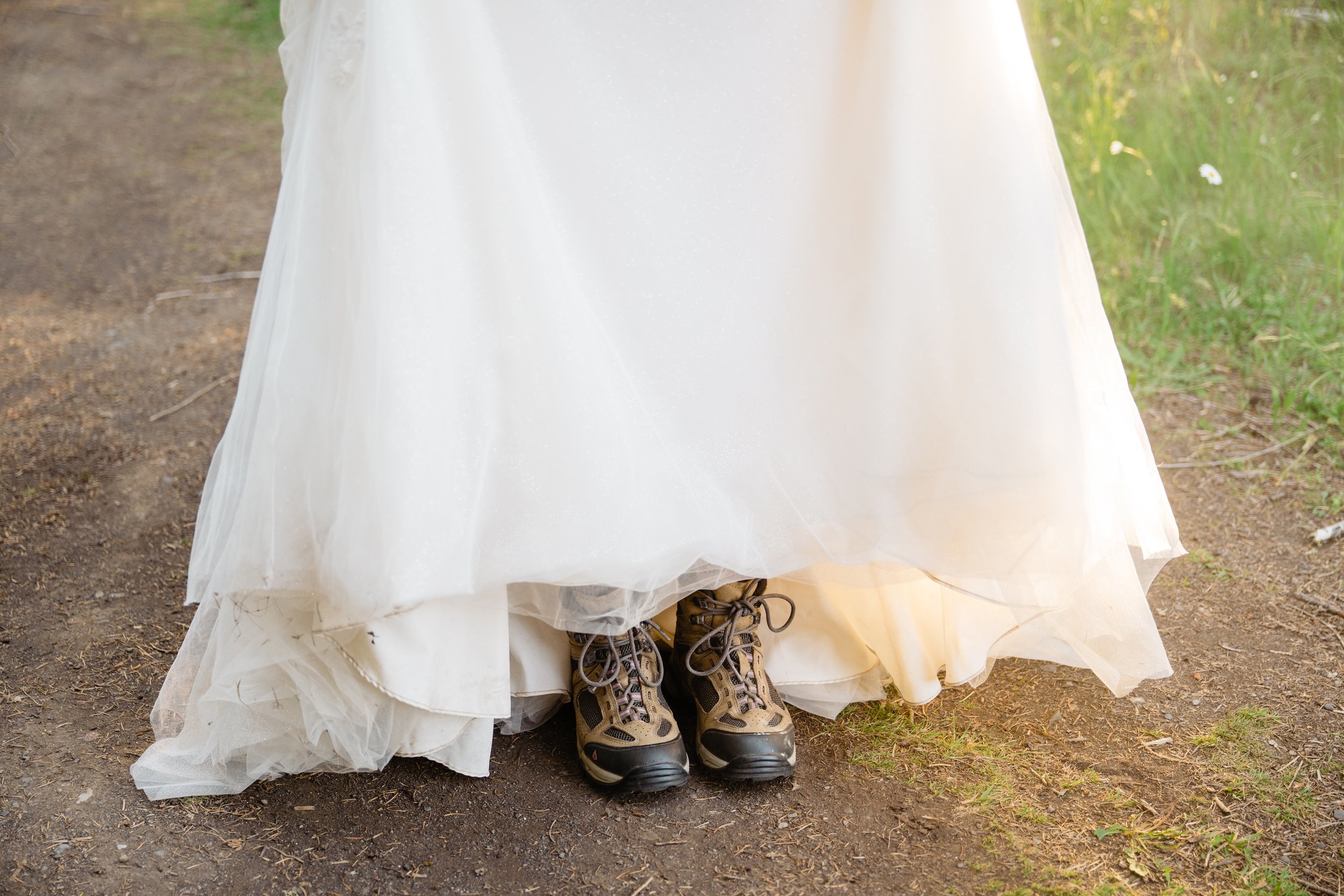
For the hike itself, I’d plan on real hiking boots or trail runners. You can always pack your ceremony shoes and change once we get to the location, but the trail is not the place to test out formal shoes for the first time.
Layers are also a big deal in Colorado. This is especially true for late fall, winter, spring, sunrise, sunset, or anything at higher elevation. If you think you might be wearing a jacket, wrap, coat, hat, or gloves during photos, choose pieces you actually like with your outfit instead of something you’ll want to hide from the camera.
For hair, wind is usually the thing to plan around. A more secure style can be helpful, but you also don’t have to fight the weather completely. Sometimes movement, loose pieces, and a slightly undone look fit the setting better anyway.
If a hiking wedding or elopement feels like the right fit check out my Guide to Colorado Micro Weddings and Elopements for a more detailed breakdown.
Whether you’re planning a small celebration with your favorite people or heading into the mountains with just the two of you, your wedding doesn’t have to look like anyone else’s. It just needs to feel like something you can actually be present for.
And if you’re looking for a Colorado wedding photographer who’s comfortable with trails, weather, timelines, and the weird little logistics that come with getting married outside, I’d love to hear what you’re dreaming up.